
An understandable grievance
Build one lasting resentment around the NPC, party and established facts. Trace its growth without declaring the NPC right or deciding who deserves blame.
NPC & social
An old grievance.
A believable history.
Choices that stay with your table.

A relationship with history
Connect what happened, what the NPC believes and what they want now.
Build one lasting resentment around the NPC, party and established facts. Trace its growth without declaring the NPC right or deciding who deserves blame.
Prepare present behaviour and possible endings. Players can make amends, set boundaries, question the account or walk away while the Dungeon Master plays the NPC.

The cause behind the resentment
An armoured veteran holds a medal while a party receives an award before a cheering crowd. A damaged wooden structure stands nearby, giving the scene details an old grievance might gather around.
Choose the cause, then separate what actually happened from the NPC’s view of it. Keep the established facts beside the history of how the resentment grew.
What you can create
Prepare a lasting grievance and fair possibilities for what happens next.
Describe the NPC, party members, established facts and present meeting. Give the grievance a clear place in your campaign history.
Set a petty, lingering, real, bitter, consuming or lifelong grudge. Match the depth to the relationship and tone you want to prepare.
Choose a public slight, blamed loss, ruined livelihood, humiliation, broken promise, being outshone, harm to family or a misunderstanding.
Keep the established events clear beside the NPC’s interpretation. An understandable grievance does not make their account automatically right.
Trace how the resentment grew and what keeps it alive. Connect an old event to the way the NPC sees the present meeting.
Prepare how the NPC acts on the grudge, from quiet resentment or gossip to sabotage, revenge or a public confrontation.
Give the NPC their side of the story and what they truly want. Use that perspective to play a person with a history.
Prepare two ways the grievance could end, two story hooks and two table tips. Leave amends, boundaries and refusal with the players.
Lock, change or edit individual sections. Save and reopen grudges, keep versions or duplicate a result to explore a variation.
Copy, export as JSON or print a Dungeon Master dossier or player-facing history. Choose the material that belongs with each audience.
Their side of the story
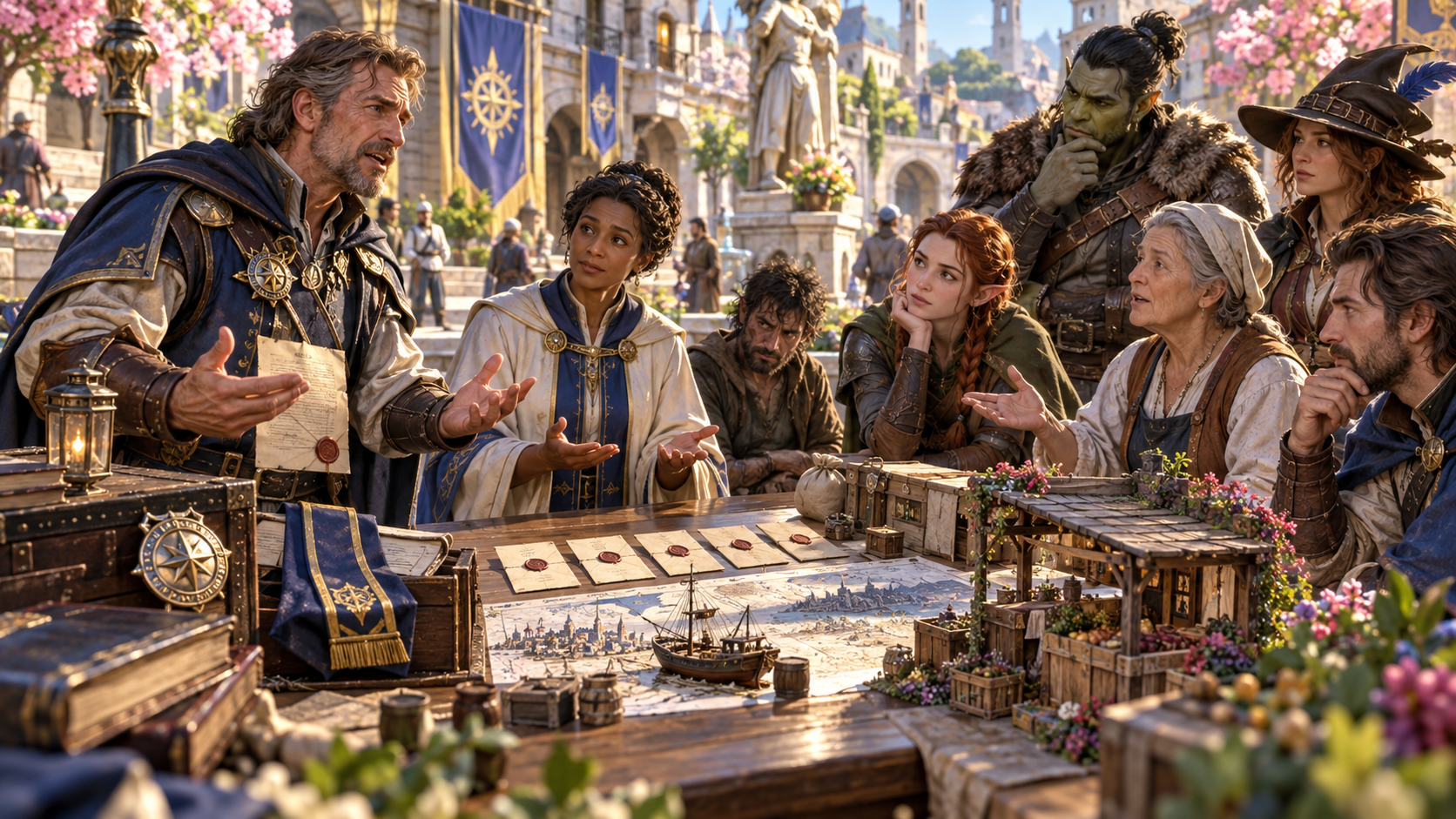
The veteran tells companions his story across a table of letters, a map and a model ship. Their attention gives his account a place in the conversation.
Build the cause, actual events, growth and what keeps the grievance alive. Add present behaviour, the NPC’s perspective and what they truly want, then review the result for your campaign.
Quick or detailed preparation
Choose the detail you need for this recurring relationship.
Describe the NPC, party members and established facts. Choose the present meeting, tone and how deeply the resentment has taken hold.
In Deep preparation, select the cause and how the NPC acts on it. Include what actually happened, things to avoid and private context.
Read the cause, history, behaviour and wants together. Lock, change or edit individual sections while preserving your established facts.
Use the two possible endings, two hooks and two table tips as preparation. Let the players choose their response when the meeting happens.
Possible endings and open choices
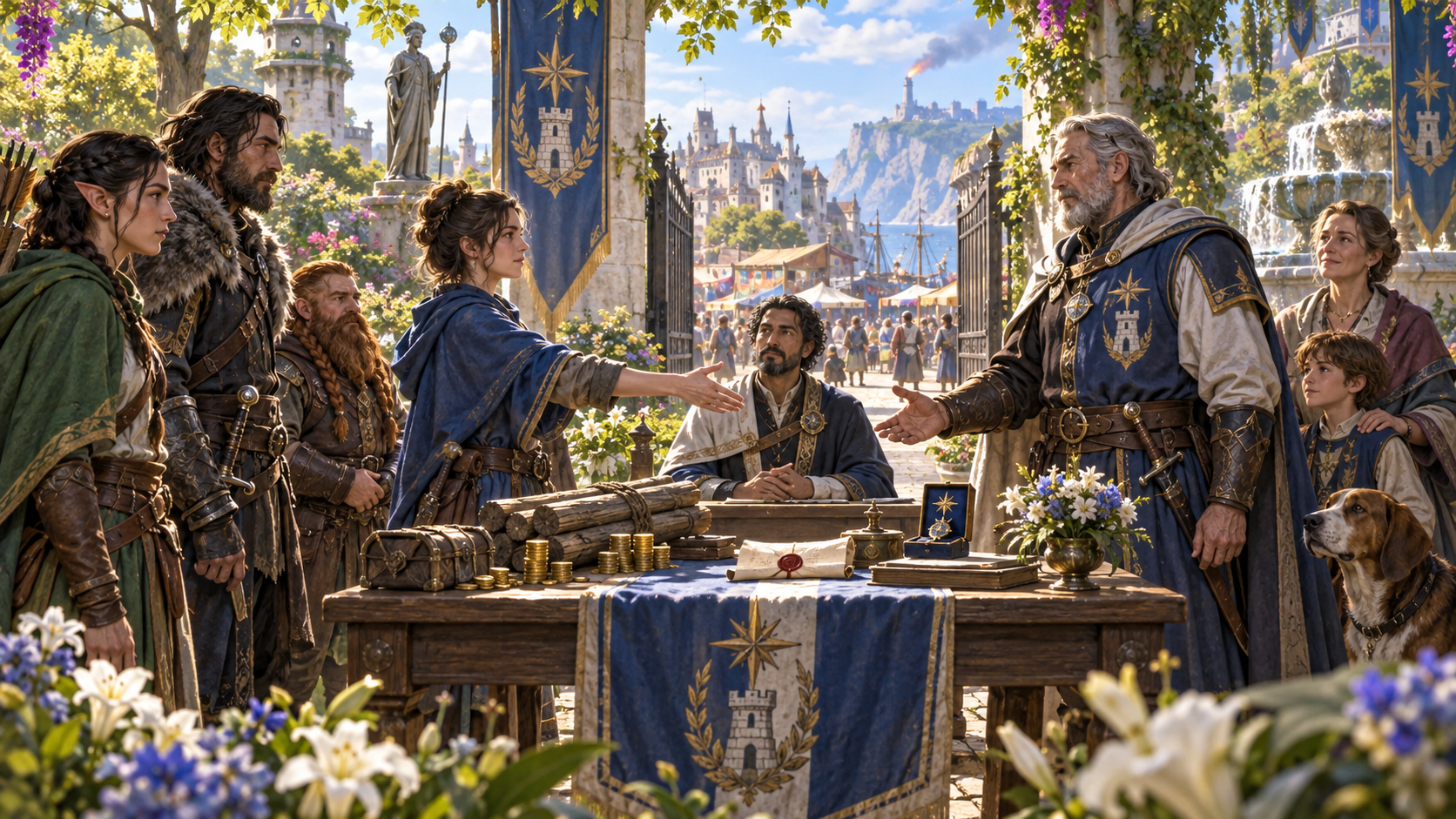
A party member offers a hand across documents and coins. The veteran answers with an open hand while a seated mediator and companions watch the exchange.
Prepare two fair possible endings without deciding that reconciliation must follow. Amends, acknowledgement, boundaries or refusal remain choices your table can explore.
Keep and share the history
Save the result and choose the view your table needs.
Keep the cause, history, growth, present behaviour, desired outcome and possible endings together. Reopen the grudge when this relationship returns.
Keep versions or duplicate a result to explore a variation. Lock, change and edit individual sections as you refine the material.
Keep actions, private context and the Dungeon Master note with your preparation. Use the complete dossier to play the NPC’s perspective consistently.
Choose a history for the players and review its contents before sharing. Copy, export JSON or print the material for the people at your table.
Your workspace and related products
Open VISINVOKE products through your account.

Open NPC Grudge in the Generators collection of your signed-in desktop workspace. Prepare, review, edit, save and export the grievance from the same product home.
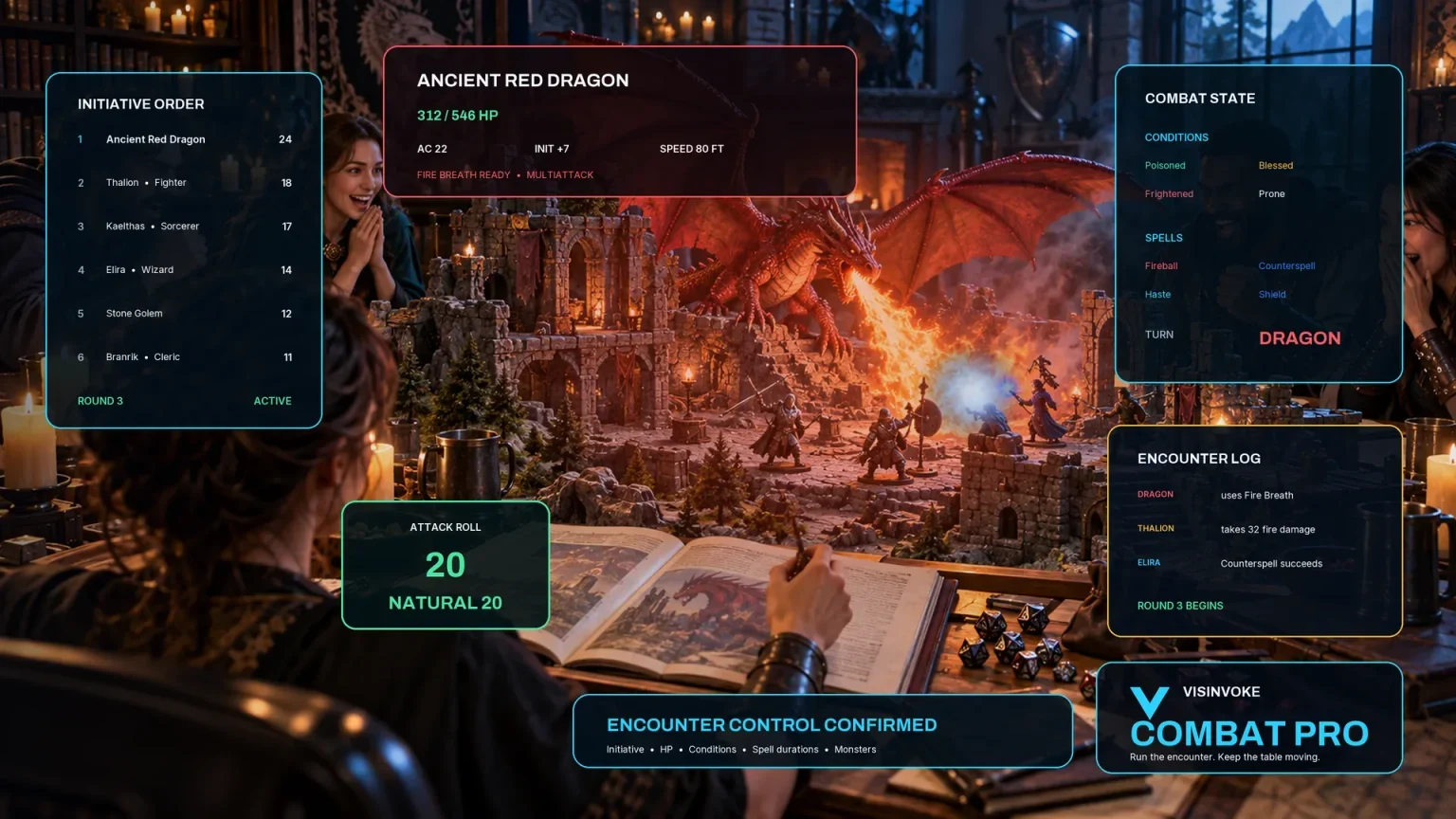
Use the separate encounter workspace when preparing combat. NPC Grudge is standalone social preparation: it sends no result to Combat PRO, starts no fight and applies no mechanic or penalty.
Images are product illustrations. The NPC’s perspective and possible endings leave player choices open.
Questions and answers
Cause, history, preparation, choices and sharing at a glance.
One long-held resentment with its cause, what actually happened, how it grew, what keeps it alive, present behaviour, the NPC’s perspective and wants, two possible endings, two hooks, two table tips and a private Dungeon Master note.
Describe the NPC and party members, set the present meeting, choose the depth of the grudge and select the tone. Generate the result, then review and edit it for your campaign.
Choose the cause and how the NPC acts on the grievance. Describe what actually happened, add things to avoid and include private context for your preparation.
The result supplies the NPC’s perspective and possible endings. Players decide whether their characters make amends, set boundaries, challenge the story or walk away. It applies no mechanic or penalty and starts no fight.
Save and reopen grudges with their cause, history, growth, present behaviour, wants and possible endings. Keep versions or duplicate a variation. Copy, export JSON or print Dungeon Master or player-facing material, reviewing what you share.
Create a free VISINVOKE account or sign in, get Desktop Control Centre through your account installer page and open NPC Grudge in the Generators collection. View current subscription details in your account.
Continue in VISINVOKE
Create a free VISINVOKE account or sign in to your existing account. Get Desktop Control Centre through your account installer page.
Open NPC Grudge in the Generators collection. View current subscription details in your account.